Join me in harnessing the transformational powers of creative expression to reclaim our voices, create meaning, and become agents of change.
This ecosystem is built on a simple premise: healing requires truth. We do not break free by sanitizing what has happened to us, or by smoothing violence into something more palatable for the comfort of others. By bringing poetry, philosophy, psychological theory, art, and advocacy into conversation, we can see more clearly what is often made invisible: the violence that shapes the lives of women and children, and the mechanisms that keep it in place—silencing, erasure, and the misuse of authority. By naming the patterns through which credibility is policed and violence is normalized, we refuse to launder predation, violence, and oppression as tenderness.
In 2005, I shared a single poem—“What I Was Wearing”—that helped spark a global movement against victim-blaming. Over time, it became part of the foundation for the “What Were You Wearing?” art installation exhibits now hosted in communities around the world. These exhibits invite survivors of gender-based and sexual violence to reclaim their stories, challenging the victim-blaming myths that protect perpetrators and keep the mechanisms of violence hidden in plain sight. (You can watch and listen to a performance reading of “What I Was Wearing” here.)
In recent years, I have been leading writing workshops with survivors of gender-based and sexual violence, and people with lived experiences of grief and loss. Writing together fosters a community of belonging, in which we discover that we no longer have to be alone. Some of the writings from these workshops have been brought together in anthologies that dismantle victim-blaming and expose the realities of sexual and gender-based violence, and the traumatic and lasting imprints of predatory events. A third anthology, Making Space for the Light, is forthcoming in 2026.
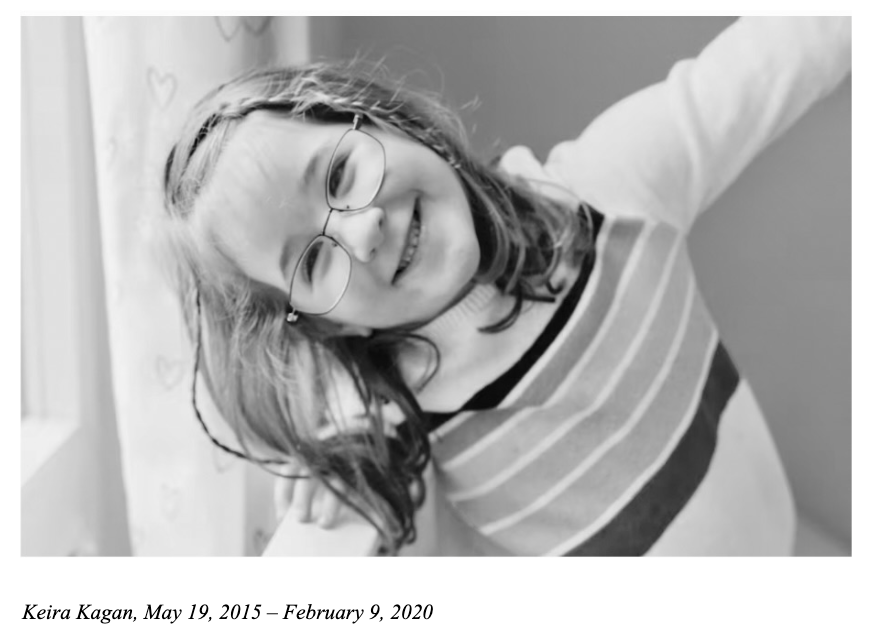
This work is consequential and remains urgent. As I know from the loss of my mother-in-law in a targeted act of femicide, not everyone survives. Making Space for the Light: Documenting the Violence that Shapes the Lives of Women and Girls is dedicated to the memory of Keira Kagan, who was murdered on February 9, 2020 by her father in a predictable and preventable act of gender-based violence and coercive control. Keira was just four years old at the time of her murder. A violent offender, her father had unsupervised court-mandated access to Keira, despite clear and known warnings to the systems charged with her protection. The courts and child protective services knew the dangers he posed to her and failed to take the necessary actions that would have protected Keira and saved her life. With Keira’s murder, we are reminded of the ongoing and urgent need for education about the widespread dangers of gender-based violence, accountability from the systems charged with protection, and immediate action for all who seek safety and refuge, especially our most vulnerable.
This is a place where we talk about what we are told not to say, because refusing silence is part of how change begins. Things can be different, and we can do better. If you are ready to join me in that work, there is a place for you here. Together we can reclaim our voices, create meaning, and build communities of belonging.
— Mary Simmerling
Write Where We Belong is a multifaceted Canadian literary and arts organization focused on using writing and art as tools for social justice. With a core dedication to advancing social justice, ending violence, and harnessing the powers of the creative self, Write Where We Belong hosts workshops, literary and arts events, and provides editing and production services for creative works. Write Where We Belong Press curates, edits, and publishes writing that emerges from the layered geographies of structural and gender-based violence, grief, loss, and hope.
By creating spaces for writers and artists of all levels to explore, discover, and share their stories, we hope to cultivate new conversations that will be the impetus for change. Things can be different. We can do better, together.

Discover the power of your creative genius to reclaim your story, advocate for social justice, and create meaning through art.


We curate produce, edit, and publish poetry, prose, and anthologies that center truth-telling, creative recovery, and the power of art to create space to bear witness. Our authors write from lived experience, bringing forward work that transforms personal and collective experience into meaning, healing, and hope.
What others say about the Press: "Write Where We Belong Press—like its visionary leader, Mary Simmerling—is a revolution in print. As the force behind it, Mary is a beacon of integrity and courage, someone who knows how to honor and support the unique voice each writer, working collaboratively to midwife every story into print, ensuring that each and every writer is seen, heard and celebrated in the most powerful way.” — Elizabeth Perlman, founder of The Intuitive Writing Project and author of Word Magic